
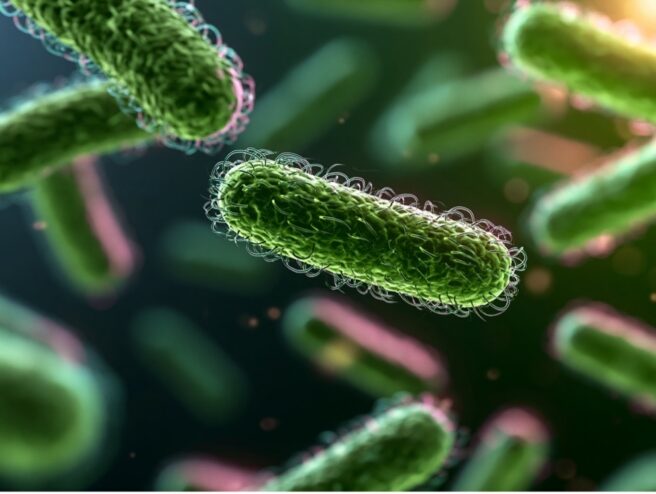
CDC declared this outbreak over on August 26, 2026, and FDA closed its investigation the same day. Fifteen people in four states — Illinois, Maryland, New York and Virginia — were infected with the outbreak strain of Listeria monocytogenes. Fourteen were hospitalized. One person in Maryland died. The source was requesón, a soft cheese similar to ricotta, made by Clover Hill Dairy, LLC of Mechanicsville, Maryland.
Fourteen people, fourteen hospitalizations
Every single person for whom CDC had hospitalization information ended up in the hospital — 14 of 14. That is what Listeria does. It is not a bug that gives you a bad night and then leaves. Of the people in this outbreak, the median age was 55, with a range from 16 to 81. Two-thirds were women. Among the 13 people whose ethnicity was recorded, 92 percent were Hispanic.
This outbreak ran for more than three years before anyone caught it
Illnesses began on dates ranging from March 6, 2023 to July 8, 2026. Whole genome sequencing tied all of them to the same strain, and that same strain was found in six samples of requesón cheese and in environmental samples collected at the plant by Maryland officials.
Read that again. A single strain of Listeria monocytogenes lived somewhere in that facility, or in its supply, for more than three years, and people kept getting sick the entire time. This is the signature of a resident strain — Listeria that has made a home in a drain, a floor seam, a piece of equipment, a cooler. It survives cold. It survives cleaning that looks thorough. And unless a plant is doing aggressive environmental monitoring and acting on what it finds, it stays.
How it finally broke open
Not through the manufacturer. On May 13, 2026, the Suffolk County Health Department told the New York State Department of Agriculture and Markets about two related Listeria illnesses in one family who had bought food from a retailer in Brentwood, New York. The state health department confirmed both had eaten requesón. State investigators pulled five cheese samples from that store; one came back positive, and sequencing matched the outbreak strain. On May 27 they inspected the store’s distributor, identified Clover Hill Dairy as the manufacturer, and sampled an unopened 18-pound sealed bucket of requesón. It was positive too.
Clover Hill recalled its requesón on June 3. Maryland suspended the dairy’s operating license. Two sick people in one family and a county health department that picked up the phone are the reason this outbreak has an ending.
The recall kept growing — and the labels kept changing
What started as a requesón recall on June 3 became, on June 18, a recall of every cheese Clover Hill made: cuajada, cheddars, Monterey Jack, pepper jack, smoked cheddar, Old Bay cheddar, snack sticks, cheese curds. On June 5 the distributor Nelson & Isa Lacteos recalled requesón sold in New York stores, and on June 26 La Ceiba Foods Latin Market recalled repackaged cheese sold under the La Colonia and Selectos Latinos brands in Maryland, Virginia and Washington, D.C.
Here is the part that should worry everyone. FDA warned that the cheese was relabeled under other brand names when it was distributed — KESSO, QUESOS LA RICURA, IZALCO, DE MI PUEBLO, RIO LINDO, and, in FDA’s words, others. Consumers were told to look for plant permit number 24-128 on the container. Much of it was scooped out of five-gallon buckets and repacked at the store with no manufacturer name on it at all.
A recall only works if a person can look at the food in their refrigerator and know whether it is the recalled food. Five of the 13 people interviewed could name Clover Hill requesón. The rest ate cheese. Where a product is repacked and rebranded on the way to the table, that is not the consumer’s failure of memory. It is a traceability failure, and it is exactly the problem FSMA Section 204 traceability was written to fix. Fresh soft cheese is on FDA’s Food Traceability List. It is also the rule industry keeps asking Congress to delay.
Pasteurized does not mean safe
CDC made a point of saying it in this advisory: fresh soft cheeses made with pasteurized milk have caused Listeria outbreaks, including this one. Pasteurization kills Listeria in the milk. It does nothing about contamination that gets into the cheese afterward, during make, drain, packing or repacking. Soft, high-moisture, ready-to-eat, refrigerated, no kill step after the point of contamination — requesón and queso fresco are close to a perfect vehicle.
Who this outbreak reached
Ninety-two percent of the people whose ethnicity was recorded were Hispanic. Requesón is a staple in Salvadoran, Mexican and other Latin American kitchens, sold at neighborhood markets and farmers markets, often loose from a bucket. An English-language advisory posted on a federal website does not reach that table. If a recall notice is going to do any good, it has to be in Spanish, and it has to be at the store, in the case, where the cheese is sold.
What to do now
The recalled cheese is past its shelf life and should be gone from stores. If you froze cheese without the original packaging and cannot tell whether it was recalled, throw it out, and clean and sanitize anything it touched — Listeria spreads to other foods and surfaces in a cold refrigerator. If you are pregnant, 65 or older, or immunocompromised, FDA’s advice is to skip queso fresco-type cheeses, including soft ricotta and requesón, unless they are heated to 165 °F or steaming hot. And symptoms can start as late as 10 weeks after you eat contaminated food, so a Listeria illness this month can still trace back to a cheese eaten in June.
Listeria
Few foodborne pathogens are as quietly dangerous as Listeria. It grows in the cold of a refrigerator, hides in ready-to-eat foods, and carries one of the highest fatality rates of any foodborne infection. In pregnant women it can cause miscarriage and stillbirth, and it is especially dangerous to newborns, older adults, and anyone with a weakened immune system. Marler Clark, The Food Safety Law Firm, is the nation’s leading firm representing victims of Listeria outbreaks. Our Listeria lawyers have represented thousands of victims in the only U.S. law practice devoted exclusively to foodborne illness, which has recovered more than $850 million for victims and families nationwide. We have traced Listeria outbreaks to lettuce, polony, deli meat, cantaloupe, cheese, celery, and milk. We represented the families of the 33 people who died in the 2011 Jensen Farms cantaloupe outbreak, one of the deadliest foodborne illness outbreaks in modern U.S. history, and more recently the victims of the 2024 Boar’s Head deli meat outbreak, among the deadliest in years.
If you or a family member became ill with a Listeria infection after eating contaminated food, contact the Marler Clark Listeria attorneys for a free case evaluation.
FAQ
What is Listeria?
Listeria monocytogenes is a bacterium that causes listeriosis, one of the deadliest foodborne infections. It grows even at refrigerator temperatures and is especially dangerous to pregnant women, newborns, adults over 65, and people with weakened immune systems. Symptoms can appear days — or even weeks — after exposure.
What foods cause Listeria outbreaks?
Deli meats, hot dogs, soft cheeses, unpasteurized dairy, smoked fish, and pre-cut produce and melon have all been linked to Listeria. Because it grows in the cold, contamination can spread during storage.
Can pasteurized cheese still cause listeriosis?
Yes. Pasteurization kills Listeria in the milk, but soft cheese made from pasteurized milk can be contaminated afterward during cheese-making, packing or repacking — which is what CDC says happened in the Clover Hill Dairy requesón outbreak.
Why is Listeria so dangerous in pregnancy?
In pregnant women Listeria can cross the placenta and cause miscarriage, stillbirth, or life-threatening infection in the newborn, even when the mother’s own symptoms are mild.
What are the symptoms of listeriosis?
Fever, muscle aches, and gastrointestinal symptoms; in invasive cases it can cause meningitis or bloodstream infection. Symptoms may not appear for up to 70 days after exposure.
Can I sue if I or my baby was harmed by Listeria?
If a contaminated food caused the infection, a product-liability claim may be available. These cases often involve serious, well-documented injuries and clear genetic links to a recalled product.
Additional Resources:
About Listeria — a complete online resource for Listeria information